
The New Developer’s Compass — Designing for Purpose, Profit, and People
A New Era of Development in Singapore
The role of developers in Singapore is evolving. Once driven primarily by yield and efficiency, today’s urban landscape demands purposeful, sustainable, and human-centred redevelopment.

The shift isn’t just philosophical — it’s systemic. Government initiatives like the Singapore Green Plan 2030, URA’s Long-Term Plan Review (LTPR), and the BCA Green Mark 2021 collectively signal one thing: the market is moving towards developments that serve not just investors, but society.
As climate, demographic, and social awareness rise, the future developer must navigate a new compass — one guided by Purpose, Profit, and People.
The Triad of Tomorrow: Purpose, Profit, People
1. Purpose: Building Beyond Returns

Singapore’s next decade of development will focus heavily on adaptive reuse and redevelopment of existing urban stock. Under the URA’s strategic intent to rejuvenate mature estates, neighbourhoods like Geylang, Balestier, and parts of the East Coast will see renewed potential.
For property investors and developers, this represents a rare opportunity to lead with purpose — by identifying not just underutilised land, but under-realised potential in human and community terms.
Purpose-driven redevelopment asks questions like:
Who will inhabit this space in 30 years?
How will it contribute to the community ecosystem around it?
Does it add emotional or environmental value beyond the structure itself?
At Archtur, we interpret these questions spatially — rethinking every brief through the lens of long-term social resonance, not short-term capital gain.
2. Profit: Redefining Value through Sustainability
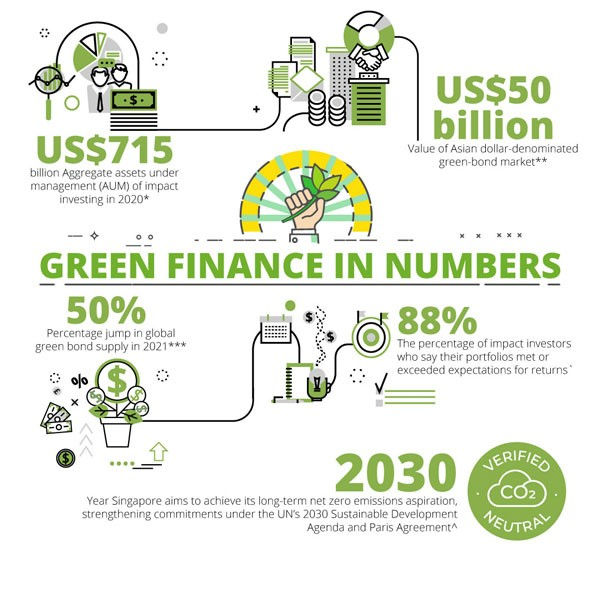
Profitability and sustainability are no longer opposing forces — they are becoming mutually reinforcing. The Monetary Authority of Singapore (MAS) and SGX Group now require sustainability disclosures from listed property developers, signaling a financial pivot towards ESG-aligned investments.
Data shows this alignment is rewarding:
Green-certified buildings in Singapore command 2–8% higher rental premiums (Knight Frank, 2024).
Energy-efficient retrofits can reduce operational costs by up to 30% (BCA, 2023).
Socially inclusive projects benefit from stronger tenant retention and positive brand association.
When viewed through this expanded lens, profit is not just a financial measure, but a multiplier of positive impact — one that creates both economic resilience and reputational capital.
3. People: Designing for the Next Generation
The heart of sustainable redevelopment lies in its people — those who build, inhabit, and inherit the spaces we create. Singapore’s demographic is shifting:
By 2030, 1 in 4 Singaporeans will be aged 65 or above.
The youth, meanwhile, are more socially and environmentally conscious than ever.
This intergenerational tension is a design opportunity. Developers who embrace inclusive mixed-use models — interweaving co-living, assisted living, and community-centric functions — can future-proof developments for a more diverse demographic mix.
In Japan and Northern Europe, developers are already experimenting with “Generational Hubs” — spaces where elderly care, childcare, and shared living coexist symbiotically. Singapore’s dense fabric makes it ideal for similar experimentation, especially in areas earmarked for rejuvenation.
At Archtur, we see these not as architectural fads, but as spatial evolutions — shaping environments that foster dignity, interdependence, and belonging.
Singapore’s Development Landscape: Reading the Signals
Singapore’s planning frameworks are gradually encouraging higher adaptive reuse and mixed-use flexibility:
URA’s CBD Incentive Scheme and Strategic Development Incentive Scheme (SDI) reward developers who reimagine ageing assets into new typologies.
The Green Plan 2030 commits to doubling greenery provision and pushing for “20-minute towns” — making human-scaled, car-light living a national goal.
LTA’s Active Mobility policies now shape not just roads, but the character of surrounding developments.
These shifts open up untapped redevelopment opportunities — especially for nimble, visionary developers who can interpret planning intentions early and reposition assets accordingly.
The Archtur Approach: Translating Policy into Purpose
At Archtur, we help developers read between the lines of urban planning — not just interpreting what is allowed, but anticipating what will matter.
Our process integrates:
Spatial Feasibility Studies — identifying underutilised plots, obsolete building stock, and design-led repositioning strategies.
Purpose-Driven Masterplanning — reimagining spaces with ESG and human-centred metrics at the core.
Collaborative Stakeholder Design — aligning architects, engineers, and social planners under a shared redevelopment vision.
In doing so, we bridge the gap between policy intention and spatial innovation — empowering developers to create spaces that are economically sound, socially inclusive, and environmentally regenerative.
Conclusion: The Future Belongs to the Intentional

As Singapore transitions into a new era of redevelopment, the next wave of growth will not come from expansion — but reimagination. Those who see development as stewardship, not speculation, will shape the landscapes that define the next generation.
The new developer’s compass points true north when Purpose, Profit, and People align — and it’s here that design transcends form, becoming a force for both prosperity and meaning.
FAQs for Developers, Investors & Industry Stakeholders
1. Why must developers rethink their approach to profit and purpose now?
Because the market has shifted. ESG reporting, demographic ageing, and planning incentives like URA’s SDI Scheme are reshaping what makes a project viable. Developments driven solely by yield risk obsolescence — while those designed with purpose and adaptability attract sustained value.
2. How do Purpose, Profit, and People translate into real project decisions?
It’s a strategic triad.
Purpose defines long-term community and environmental goals.
Profit integrates ESG-aligned financial resilience.
People anchors design around users’ evolving needs.
Balancing these ensures that every square metre delivers both impact and return.
3. Is sustainable redevelopment financially rewarding?
Yes. Studies show green-certified buildings command 2–8% higher rents and up to 30% lower operating costs. Purpose-driven projects also strengthen brand equity, tenant retention, and investor confidence — proving that sustainability compounds profit, not competes with it.
4. How can smaller developers compete in this new paradigm?
By being agile. Mid-tier developers can identify niche urban plots, leverage adaptive reuse, and partner with consultancies like Archtur that translate policy intent into design strategy. Purpose-driven positioning builds distinctiveness in a crowded market.
5. What is Archtur’s unique value proposition to developers?
Archtur helps decode Singapore’s evolving urban language — aligning redevelopment feasibility, ESG goals, and human experience into one coherent strategy. We enable developers to stay ahead of planning signals while creating purposeful, profitable, and people-centric spaces.
FAQs for Government, Institutions & Community Partners
1. How does this “new compass” align with Singapore’s Green Plan and LTPR?
It operationalizes their intent. The Green Plan’s goals for sustainability and liveability, and the LTPR’s focus on rejuvenation and 20-minute towns, both rely on developers who can integrate social and environmental purpose into commercially viable frameworks.
2. How can policy and private development collaborate more effectively?
Through design-led interpretation. When planning frameworks meet empathetic spatial design, the result is projects that deliver measurable public outcomes — such as intergenerational hubs, inclusive mixed-use estates, and adaptive reuse of ageing assets.
3. What international trends support this evolution?
Globally, cities like Tokyo, Melbourne, and Copenhagen are rewarding adaptive reuse, low-carbon retrofits, and mixed generational living. Singapore’s density and regulatory clarity give it the advantage to leapfrog ahead — provided design and policy remain aligned.
4. How can public agencies encourage more purpose-driven projects?
By recognising the economic value of human-centric metrics — such as social integration, accessibility, and wellness. Policy instruments that reward these outcomes will attract developers eager to align profitability with public purpose.
5. What role does Archtur play in bridging public-private collaboration?
Archtur acts as an integrator — translating broad policy frameworks into spatial strategies and tangible design outcomes. We bring developers, agencies, and community partners into a shared dialogue on how design can serve both people and policy efficiently.


Comments